
CASE STUDY
Working with the Roma Community
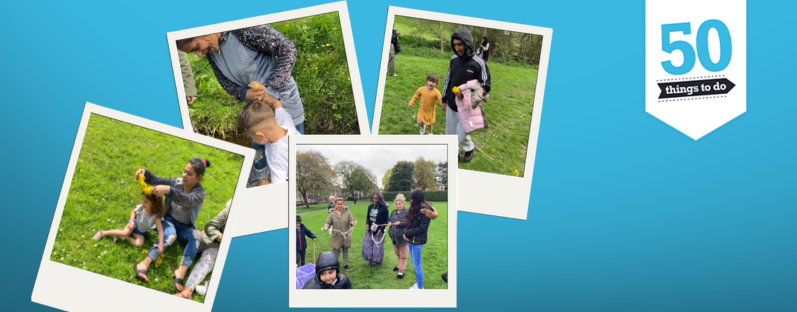
Working with the Roma Community: Promoting Community and Celebrating Diversity
This case study looks at how 50 Things to Do Before You're Five is used to engage Roma families at St Edmund's Nursery School in Girlington, Bradford. It explores how the programme's place-based, non-judgemental approach to playful learning aligns with the way Roma families already promote home learning, and the central role of trusted, community-rooted practitioners in making that connection work.
Download the full case study (PDF, 6 pages)
The Context
Roma communities face some of the starkest inequalities in outcomes among the UK population. Nationally, 49.5% of Gypsy or Roma children are in the bottom 20% of the Early Years Foundation Stage Profile, and Roma children remain among the lowest-achieving ethnic groups in England. Discrimination in educational settings can leave families feeling alienated, and language barriers add a further obstacle - making open, honest, trust-based relationships essential.
"All Roma parents want the best for their children and want to see them succeed, according to their cultural values, lifestyle and aspirations." — Moving Forward Together: Raising Gypsy, Roma and Traveller Achievement, The National Strategies (2009)
Stay & Play in Practice
St Edmund's hosts a weekly "Play and Learn" session that incorporates 50 Things activities. Children and families play together, and parents are encouraged to continue the activities at home, adapting them to their own household traditions. The sessions foster socialisation, encourage play-based learning and strengthen parent–child bonding - giving families space and resources for activities like messy play that they may not be able to provide at home (for example #4 Make Your Mark, #5 Squidgy Sand, #17 Hocus Pocus Potions and #26 Splish, Splash, Splosh).
Juraj Tancos, St Edmund's EU Migrant Workers Support Officer and a lead practitioner in these sessions, takes extra time to talk parents through the initiative - offering picture-based posters and modelling activities, since illiteracy rates are high in the community and the website translation tool alone is not enough. The fact that Juraj is himself from the Roma community is central to the trust that makes this work.
How 50 Things Aligns with Roma Home Learning
There has been little specific research on play in UK Roma communities, but studies elsewhere and practitioner experience point to consistent themes. Common attributes of learning in Roma households include:
- Children learning through participation rather than verbal explanation
- Learning that involves temporal and spatial freedom not always possible in school
- Learning that takes place on an intergenerational basis
- Learning that is collaborative rather than competitive
- Opportunities for children to work independently
- A clear connection to everyday life
- Learning that enhances the sense of community identity and family
50 Things' focus on families having fun together - an inclusive, non-judgemental way for parents to engage with their children - aligns closely with this approach.
The Impact in Numbers
Parental data is taken from the 50 Things to Do Before You're Five national user evaluation and does not only represent the Roma community.
Find Out More
With thanks to Juraj Tancos and the Roma families at St Edmund's Nursery School for making this case study possible. You can read more about Juraj's journey in the State of the Nation 2023 - People and Places report (pages 224–225), available on GOV.UK.
If you would like to discuss this case study please contact us using the following contact details:
Phone
01274 494898
info@50thingstodo.org
Address
Washington Street,
Girlington,
Bradford BD8 9QW
CASE STUDIES