
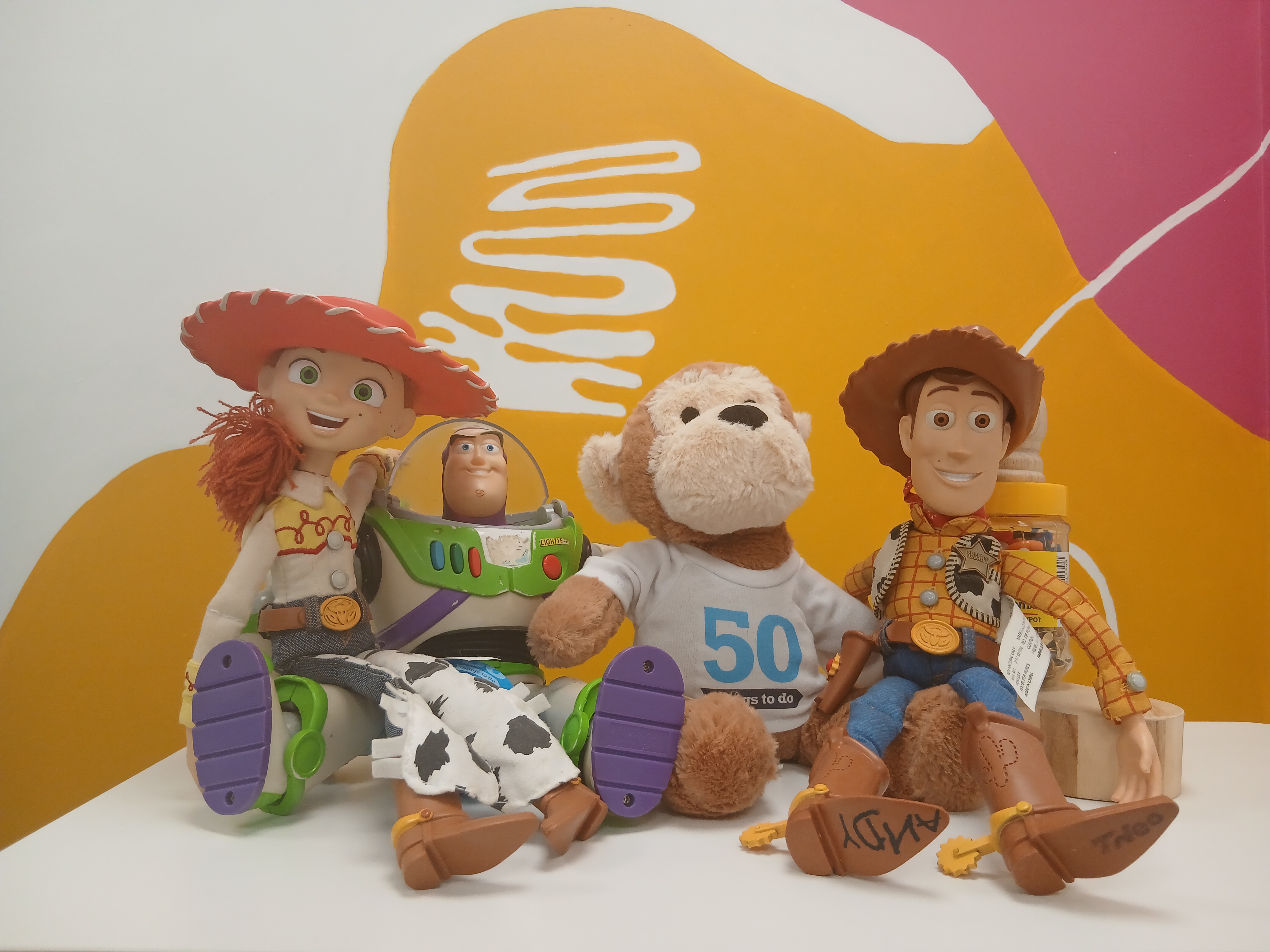
I know I'm a bit late to the Toy Story 5 conversation ... but I've only just got around to finally seeing it. In short, I loved it and I highly recommend it. But I have to admit that the latest instalment in the film series – hard to believe it all began back in 1995 – left me feeling quite emotional.
You see, for the last 18 months I've been talking, writing and banging on about the impact that increased screen use in early childhood is having on families with anyone and everyone, from colleagues and policymakers to practitioners and parents.
So, when I sat down in the cinema with my kids to watch Toy Story 5 on the big screen, I found myself thinking that “this is exactly the conversation 50 Things To Do is trying to have”.
Whether it's launching our flagship Less Screen Time, More Play Time campaign, hosting webinars that explore how families can build healthier habits through active, screen-free play or sharing evidence (as we did when the government put a call to help it develop early years screen time and usage guidance) or helping put together our first ever national conference – which will bring together top experts from across the country – it all stems from the same belief that screen time should never come at the expense of real-world play.
And it’s not because the movie is anti-screen (because it isn't). But because the story, through the adventures of Woody, Buzz, Jessie and the rest of the gang, ultimately shines a light on something that many of us are increasingly worried about.
That childhood is changing – and not necessarily in a good way.
When screens become the default, go-to activity of choice, something else quietly slips away. The made-up games. The adventures. The conversations. The moments of boredom that spark creativity. The freedom to explore, imagine, build, climb, create and simply play.
That's not nostalgia talking. It's what the evidence tells us and it's what I've seen throughout my career working with children and families.
To be clear, I'm not suggesting we throw tablets, smartphones, laptops and the like out of the window. Technology is here to stay and it has its place, its uses and its benefits.
But we do need to ask ourselves an important question: what are our children missing out on when screens begin to replace play, rather than sit alongside it? If a film like Toy Story 5 helps more people stop and think about that, then that's no bad thing. In fact, it’s a good thing.
Because this has never been about demonising screens. It’s about balance. It's about standing up for childhood. And it's about making sure children have the time, space and freedom to play, imagine and discover the world for themselves. There’s no better start to life than that.
-
Rebecca Oberg is the director of Birth to 19's Institute for the Early Years. She leads on the strategic direction of 50 Things To Do to achieve a screen-free future for children.